Traveling with an Autistic Child: Tips for a Smoother Trip
Whether it’s a cross-country flight, a long weekend road trip, or just the drive to grandma’s house, travel throws a lot of your child’s routine out the window all at once — new sounds, new smells, unpredictable waits, and none of the familiar anchors that make an ordinary day feel safe. With a little planning, though, travel can go from something you dread to something your whole family can actually enjoy.
Prep Before You Go
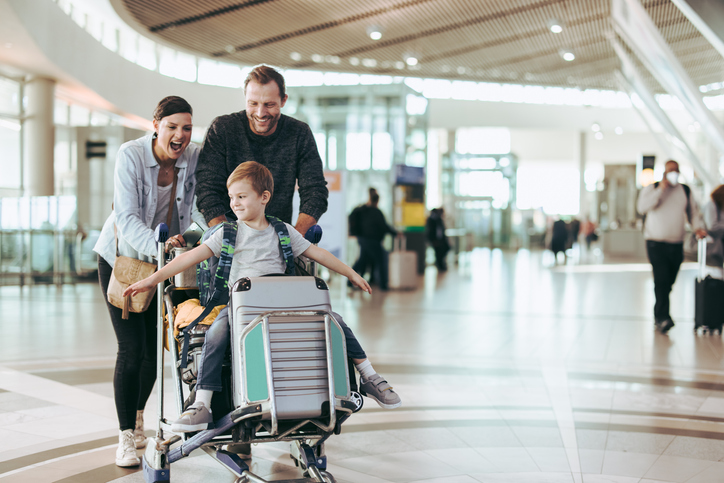
traveling with autistic child
Build a visual schedule of the trip. A simple sequence — car, airport, plane, new house — gives your child a map of what’s coming. Uncertainty is often the hardest part of travel for autistic kids, so even a rough outline can lower anxiety before you ever leave the driveway.
Practice the parts you can practice. If your child has never been through TSA security, look up photos or videos together beforehand. If they’ve never stayed in a hotel, talk through what a hotel room looks like and how it’s different from home.
Pack a “sensory go-bag” separate from your regular luggage. Keep noise-reducing headphones, a favorite chewy or fidget, a weighted lap pad, and any comfort item within arm’s reach — not buried in checked luggage — so you’re never digging for a regulation tool mid-meltdown.
Bring familiar snacks and a refillable water bottle. New environments are hard enough without also navigating unfamiliar food. Familiar snacks are one less variable your child has to process.
During the Journey
Give plenty of warning before transitions. “In five minutes we’re going to board the plane” lands very differently than a sudden “okay, let’s go.” Countdown warnings, visual timers, or a simple first/then card can ease each shift.
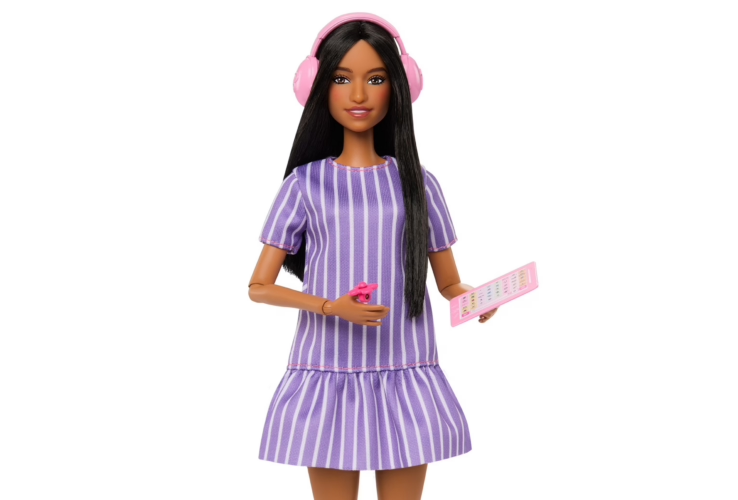
Have a screen-free option ready, too. Screens are a reliable go-to for long stretches of downtime, but having a hands-on, screen-free alternative matters — especially for security lines, restaurant waits, or moments when you want your child visually engaged with the world instead of zoned out. This is where something like the I Spy Travel Card Game earns its spot in the go-bag: it’s a compact, quiet card deck that turns “find the object” into a calming, structured visual search — perfect for a car seat, a tray table, or a waiting room chair, and it doubles as a low-key way to practice descriptive language and turn-taking with a sibling.
Protect one predictable comfort, wherever you are. That might be a bedtime routine, a specific stuffed animal, or a particular snack at a particular time. Anchoring one thing to “normal” helps everything else feel more manageable.
Watch for early signs of overload, not just full meltdowns. Covering ears, rocking, going quiet, or repetitive movements often show up well before a full dysregulation event. Catching those cues early — and stepping into a quieter space for a few minutes — can prevent things from escalating.
At Your Destination
Recreate a piece of home. The same nightlight, the same blanket, or even the same background sound machine can make a strange room feel familiar fast.
Build in recovery time. New places are exhausting even when the trip is fun. Don’t over-schedule the first day — buffer time to decompress will pay off for the rest of the trip.
Know your exits. Scope out a quiet corner, a car, or a bathroom you can retreat to if things get overwhelming, whether you’re at a theme park, a family gathering, or a restaurant.
The Bottom Line
None of this has to be perfect. Some trips will go smoothly and some won’t, and that’s true for every family, autistic kids or not. What actually helps is having a few reliable tools in your back pocket — visual supports, sensory items, and something calming and screen-free for the in-between moments — so you’re prepared rather than scrambling.
However you’re getting where you’re going this summer, we hope it’s a little smoother, a little calmer, and a lot more fun.