Autistic Barbie: Representation That Truly Matters
In 2024, Mattel introduced Autistic Barbie, a doll designed in collaboration with autistic self-advocates and the National Autistic Society. While Barbie has evolved over the decades to better reflect the diversity of the real world, this release marked an especially meaningful step forward—not just for the toy industry, but for autistic individuals and families everywhere.
Representation matters, especially in childhood. For decades, autistic children rarely saw themselves reflected in toys, media, or popular culture. Autistic Barbie helps change that narrative. She isn’t a “special edition” defined by stereotypes or deficit-based thinking. Instead, she represents autism as a natural part of human diversity—something that exists alongside creativity, intelligence, and individuality.
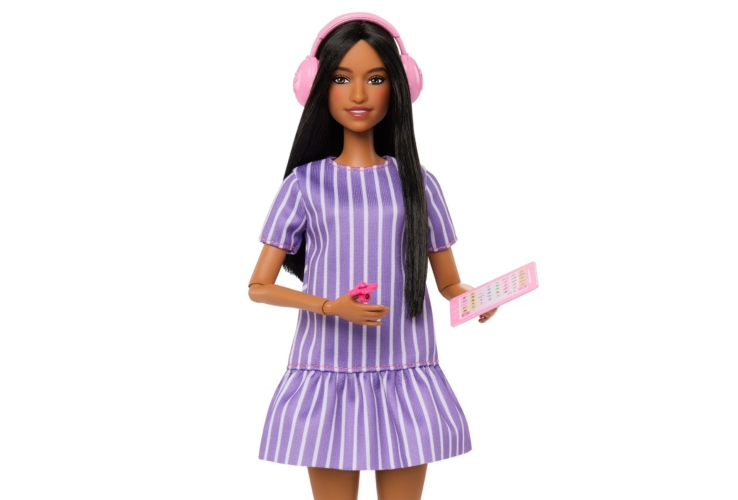 The design of Autistic Barbie was intentionally thoughtful. Her outfit features soft, muted colors chosen to reduce visual overload, and her necklace includes a puzzle-piece-inspired infinity symbol—representing neurodiversity and inclusion rather than outdated or controversial imagery. She also wears pink sunglasses, a nod to light sensitivity, a common experience for many autistic people. These details weren’t added for decoration; they reflect real lived experiences and were shaped by autistic voices.
For autistic children, this kind of representation can be deeply validating. Seeing a globally recognized doll that shares aspects of their sensory needs or communication style sends a powerful message: you belong. Toys play a crucial role in how children understand themselves and others. Autistic Barbie gives autistic kids the opportunity to see themselves as worthy of being represented—confident, capable, and valued.
The impact extends beyond autistic children. For non-autistic kids, Autistic Barbie opens the door to understanding and acceptance. When children play with dolls that represent different ways of experiencing the world, inclusion becomes normal rather than something that needs explanation. This kind of early exposure helps foster empathy, reduces stigma, and encourages conversations about differences in a natural, age-appropriate way.
Of course, no single toy can represent the full diversity of the autism spectrum. Autism looks different for every individual, and that complexity can’t be captured by one doll. But Autistic Barbie isn’t meant to define autism—she’s meant to acknowledge it. She’s a starting point, not a conclusion.
At Autism-Products.com, we believe inclusion isn’t about “fixing” autistic people—it’s about respecting, supporting, and celebrating them. Autistic Barbie aligns with that philosophy by centering autistic experiences without framing them as problems to be solved. She represents progress toward a world where autistic individuals are seen, heard, and accepted for who they are.
Autistic Barbie isn’t just a doll. She’s a symbol of visibility, acceptance, and the growing recognition that neurodiversity belongs everywhere—including the toy box.